
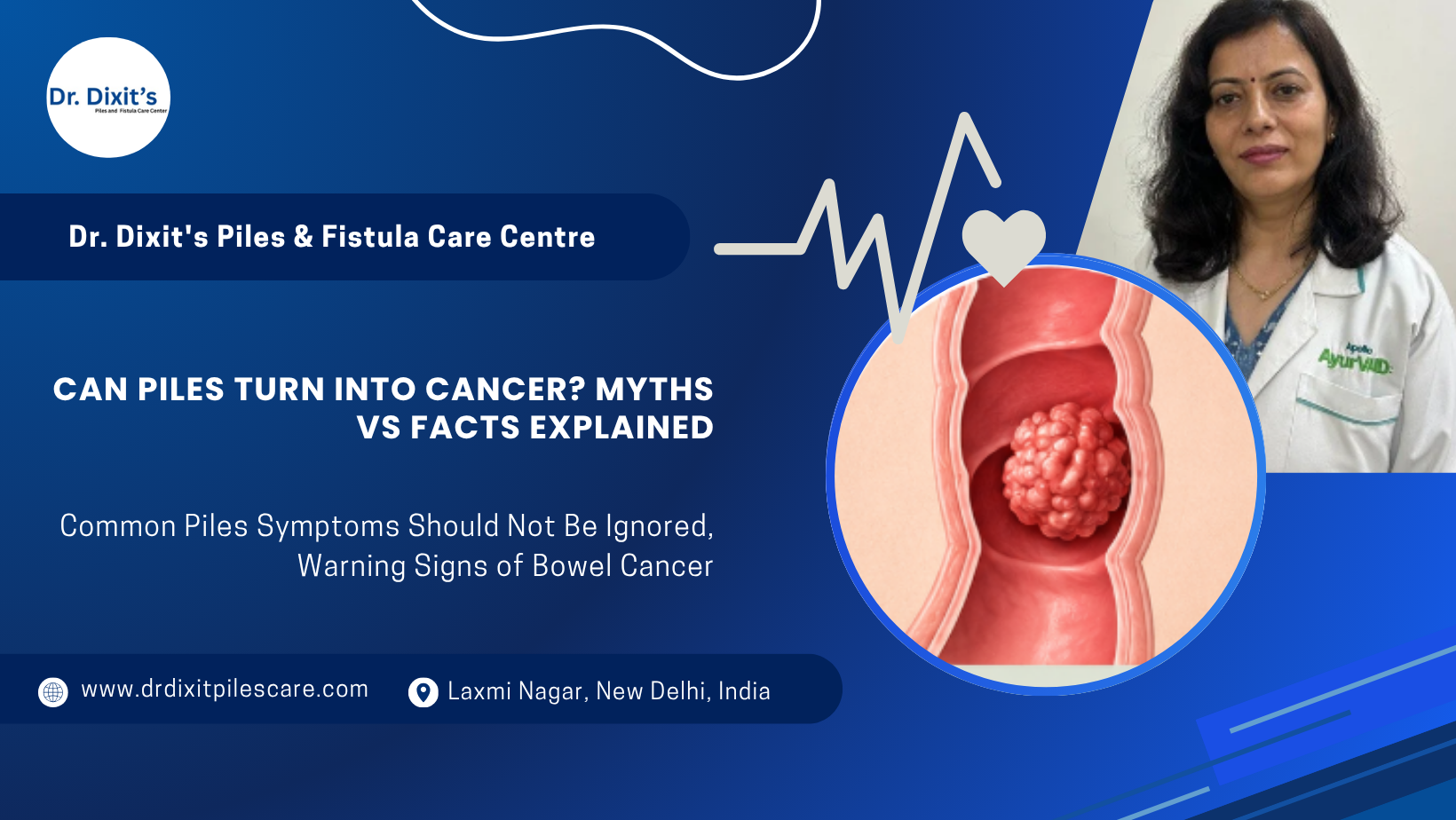
The sight of blood in stools can be alarming, with concerns about the possibilities of whether piles will become cancer. The quick answer to this question is that no, they cannot. Hemorrhoids, also known as piles, are simply swollen blood vessels in and around the anal region. They are benign and have nothing to do with cancer. However, both cancer and piles can share similar symptoms like rectal bleeding.
This misconception usually arises out of searches such as can piles become cancer, can piles be life-threatening, or even do piles cause death following the discovery of the symptoms of piles such as pain or bleeding. The distinction between piles and cancer will help you clear your mind from unnecessary fears as well as understand when it is time to seek professional help.
Are Piles and Cancer the Same Condition?
No, piles and cancer are two different medical conditions. Piles develop when the blood vessels and supporting tissues around the anus and lower rectum become swollen. They are commonly associated with constipation, straining during bowel movements, prolonged sitting on the toilet, pregnancy, obesity, and other factors that increase pressure in the anorectal area.
Colon or rectal cancer, on the other hand, develops when abnormal cells grow uncontrollably in the digestive tract. Some colorectal cancers can develop from polyps over time. Unlike piles, cancer requires specific medical evaluation and treatment. Having hemorrhoids does not mean that you have cancer, and piles do not increase the risk of colon cancer.
Can Piles Turn Into Cancer?
One of the most common myths is that untreated piles eventually become cancer. This is not true. Piles cannot turn into cancer, even when they have been present for a long time. Chronic hemorrhoids may cause repeated bleeding, itching, swelling, discomfort, or prolapse, but these symptoms do not mean that the piles are becoming cancerous.
The important point is that a person can have piles and cancer at the same time. Therefore, if you have been diagnosed with piles but develop new, persistent, or unusual symptoms, it is important to get them checked rather than assuming everything is due to hemorrhoids. Persistent rectal bleeding, changes in bowel habits, unexplained weight loss, abdominal pain, and fatigue deserve medical attention.
Why Can Piles Sometimes Be Confused With Cancer?
The main reason for confusion is that both piles and colorectal cancer can cause blood in the stool. Piles commonly cause bright red bleeding during or after bowel movements, particularly when there is straining or constipation. It may appear on toilet paper, on the outside of the stool, or in the toilet bowl.
However, the appearance of blood alone cannot confirm the cause. Rectal bleeding may also occur with anal fissures, polyps, inflammatory bowel disease, and colorectal cancer. Mayo Clinic also notes that it can be difficult to distinguish hemorrhoid-related bleeding from cancer-related bleeding based only on symptoms.
What Are Common Piles Symptoms?
Typical piles symptoms may include bright red bleeding, itching, swelling, discomfort, or a lump near the anus, especially with external hemorrhoids.
-
Bright red blood during or after bowel movements
-
Itching, irritation, or swelling around the anus
-
Painful lumps caused by external or thrombosed hemorrhoids
-
Internal piles may bleed without causing severe pain
-
Constipation and straining can worsen symptoms
-
Fibre, water, and healthy bowel habits may provide relief
-
Repeated bleeding should be evaluated by a healthcare professional
Symptoms often worsen with constipation or straining, so timely care and lifestyle changes can support relief and prevent complications.
What Symptoms Should Not Be Ignored?
Although most rectal bleeding is not caused by cancer, certain symptoms should be evaluated, especially when they continue or become worse. Persistent bleeding, blood mixed into the stool, unexplained weight loss, ongoing abdominal pain, persistent constipation or diarrhoea, unusual changes in stool shape, and unexplained tiredness can require further investigation.
It is also important to seek medical advice if your symptoms do not improve despite treatment for piles. A previous diagnosis of hemorrhoids should not prevent you from getting new or changing symptoms evaluated. The cause may still be piles, but proper assessment helps rule out other conditions and provides peace of mind.
What Are the Warning Signs of Bowel Cancer?
People often search for the 5 warning signs of bowel cancer. While symptoms can vary, commonly recognised warning signs include persistent changes in bowel habits, blood in or on the stool, unexplained weight loss, ongoing abdominal discomfort, and unusual tiredness or weakness. Some people may also experience a feeling that the bowel does not empty completely or notice narrower stools.
These symptoms do not automatically mean that someone has bowel cancer. They can occur because of several other digestive conditions. However, when symptoms persist, recur frequently, or occur together, medical evaluation becomes particularly important. Early investigation can help identify the actual cause and ensure that appropriate treatment is started if necessary.
Can Hemorrhoids Be Dangerous?
Most piles are not dangerous and can often be managed successfully with appropriate lifestyle changes and treatment. However, severe or untreated hemorrhoids can cause significant bleeding, pain, swelling, or complications such as thrombosis in some cases.
The bigger concern is assuming that every episode of rectal bleeding is caused by hemorrhoids. Since rectal bleeding has multiple possible causes, it should be assessed when it is persistent, recurrent, heavy, or accompanied by other concerning symptoms. A healthcare professional may examine the anal canal and rectum and recommend additional tests when required.
Can Severe Piles Cause Death or Lead to Life-Threatening Complications?
In most cases, piles do not cause death. Hemorrhoids are a common condition and are generally not life-threatening. However, heavy or prolonged bleeding should never be ignored because significant blood loss can lead to anaemia and other health problems.
More importantly, assuming that unexplained bleeding is simply piles can delay the diagnosis of another condition. If bleeding is frequent, heavy, mixed with stool, or accompanied by weakness, dizziness, weight loss, abdominal pain, or changes in bowel habits, consult a healthcare professional promptly.
Can Piles Turn Into Colon Cancer?
No, piles do not turn into colon cancer. Hemorrhoids affect the blood vessels and tissues around the anus and lower rectum, whereas colon cancer develops from abnormal cells in the colon. These are different conditions with different causes and disease processes.
However, having piles does not protect a person from developing colorectal cancer. If a person has hemorrhoids and later develops persistent rectal bleeding or other concerning symptoms, the new symptoms should be evaluated separately. This is why it is not advisable to repeatedly self-treat bleeding without understanding its cause.
Can an Anal Fissure Cause Cancer?
An anal fissure is a small tear in the lining of the anus, commonly associated with passing hard stools, constipation, or straining. An anal fissure does not normally turn into cancer. It can cause sharp pain during bowel movements and bright red bleeding, which can sometimes create the same fear associated with piles.
However, a fissure that does not heal, keeps returning, or produces unusual symptoms should be evaluated by a doctor. Persistent symptoms may require further examination to confirm the diagnosis and rule out other conditions. The important principle is not to assume that every instance of anal bleeding is caused by a fissure or piles.
How Can You Distinguish Piles From Colon Cancer?
There is no reliable way to distinguish piles from colon cancer based only on one symptom. Bright red blood associated with bowel movements and anal itching or swelling can commonly occur with piles, while persistent bowel changes, unexplained weight loss, abdominal symptoms, fatigue, or blood mixed with stool may require further investigation.
Doctors may use a physical examination, rectal examination, anoscopy or other examinations depending on the symptoms. When there is concern about colorectal disease, investigations such as blood tests, stool tests, or colonoscopy may be recommended. Mayo Clinic notes that colonoscopy may be considered when symptoms suggest another digestive disease or when colorectal cancer risk factors are present.
What Should You Do If You Notice Blood in Your Stool?
Firstly, do not panic, but at the same time, do not ignore recurrent bleeding. Bowel movements with bleeding may happen due to hemorrhoids or anal fissure if you suffer from constipation and have strain. But there are other reasons of bleeding too. The cause of the symptom should be clarified if you experience recurrent bleeding or other symptoms.
If you suffer from recurrent bleeding, blood in the stool, unexpected weight loss, abdominal pain, changes in bowel movement, unexplained fatigue or bleeding, you should undergo medical examination. This does not mean that you have cancer. It is just necessary to find out the cause of the symptom.
Can Piles Be Cured or Managed Successfully?
Piles can often be managed effectively with appropriate treatment, particularly when they are identified early. Treatment depends on whether the hemorrhoids are internal or external, their severity, and the symptoms experienced by the patient. Lifestyle changes such as increasing dietary fibre, drinking enough water, staying physically active, and avoiding straining can support bowel health.
Depending on the condition, doctors may recommend medicines, conservative care, or procedures for more persistent hemorrhoids. Patients looking for piles treatment without surgery or Ayurvedic treatment for piles should first receive an appropriate diagnosis and discuss suitable options with a qualified specialist.
When Should You Consult a Doctor?
You should consider consulting a doctor if rectal bleeding keeps returning, does not improve with basic piles care, or is accompanied by pain, changes in bowel habits, weight loss, abdominal discomfort, or unusual tiredness. You should also seek evaluation if you are unsure whether your symptoms are caused by piles, fissure, or another condition.
A specialist can assess your symptoms and decide whether further examination or testing is needed. This is especially important because symptoms alone cannot reliably distinguish hemorrhoids from colorectal or rectal cancer. Early medical evaluation can prevent unnecessary worry while ensuring that serious conditions are not overlooked.
Conclusion
In reply to "Can piles cause cancer?", one can state that piles do not lead to cancer. Piles and colorectal cancer are two separate health problems, and piles are not a risk factor for getting cancer. Nevertheless, rectal bleeding does not always have to be considered as piles. In case the patient experiences prolonged or recurrent rectal bleeding, as well as any other signs such as weight loss, changes in bowel movements, pain in abdomen, weakness, etc., he or she should consult a doctor.
Frequently Asked Questions
Can piles be confused with cancer?
Yes. Piles and colorectal cancer can both cause rectal bleeding, which can make them difficult to distinguish based on symptoms alone. Piles commonly cause bright red bleeding around bowel movements, while cancer can also cause bleeding along with persistent changes in bowel habits, unexplained weight loss, abdominal discomfort, or fatigue. If bleeding continues or returns frequently, medical evaluation is recommended rather than assuming it is only piles.
Are piles linked to cancer?
Piles are not cancer and do not turn into cancer. They also do not increase the risk of developing colon cancer. However, a person can have piles and cancer at the same time. Therefore, new or persistent symptoms should not automatically be attributed to a previous diagnosis of hemorrhoids.
How can you distinguish between piles and colon cancer?
Symptoms can provide clues, but they cannot provide a definite diagnosis. Piles commonly cause bright red bleeding, itching, anal discomfort, and swelling. Colon cancer may cause persistent bowel changes, blood in the stool, unexplained weight loss, abdominal discomfort, fatigue, or changes in stool appearance. A doctor may recommend examination, blood or stool tests, or colonoscopy depending on the symptoms and risk factors.
What are the 5 warning signs of bowel cancer?
Common warning signs include persistent changes in bowel habits, blood in or on the stool, unexplained weight loss, ongoing abdominal pain or discomfort, and unexplained weakness or fatigue. A feeling of incomplete bowel emptying and changes in stool shape can also occur. These symptoms do not necessarily indicate cancer, but persistent or recurring symptoms should be medically evaluated.
Can hemorrhoids cause cancer?
No. Hemorrhoids cannot cause cancer or transform into cancer. They are swollen veins and supporting tissues around the anus and lower rectum. However, hemorrhoids can coexist with other conditions, and rectal bleeding should not automatically be blamed on hemorrhoids if it persists, changes, or occurs with other warning signs.
Does piles cause death?
Piles are generally not life-threatening, and piles do not usually cause death. Severe or prolonged bleeding, however, should receive medical attention. More importantly, unexplained rectal bleeding can sometimes be caused by conditions other than piles, so persistent or recurrent bleeding should be evaluated instead of being repeatedly self-treated.