
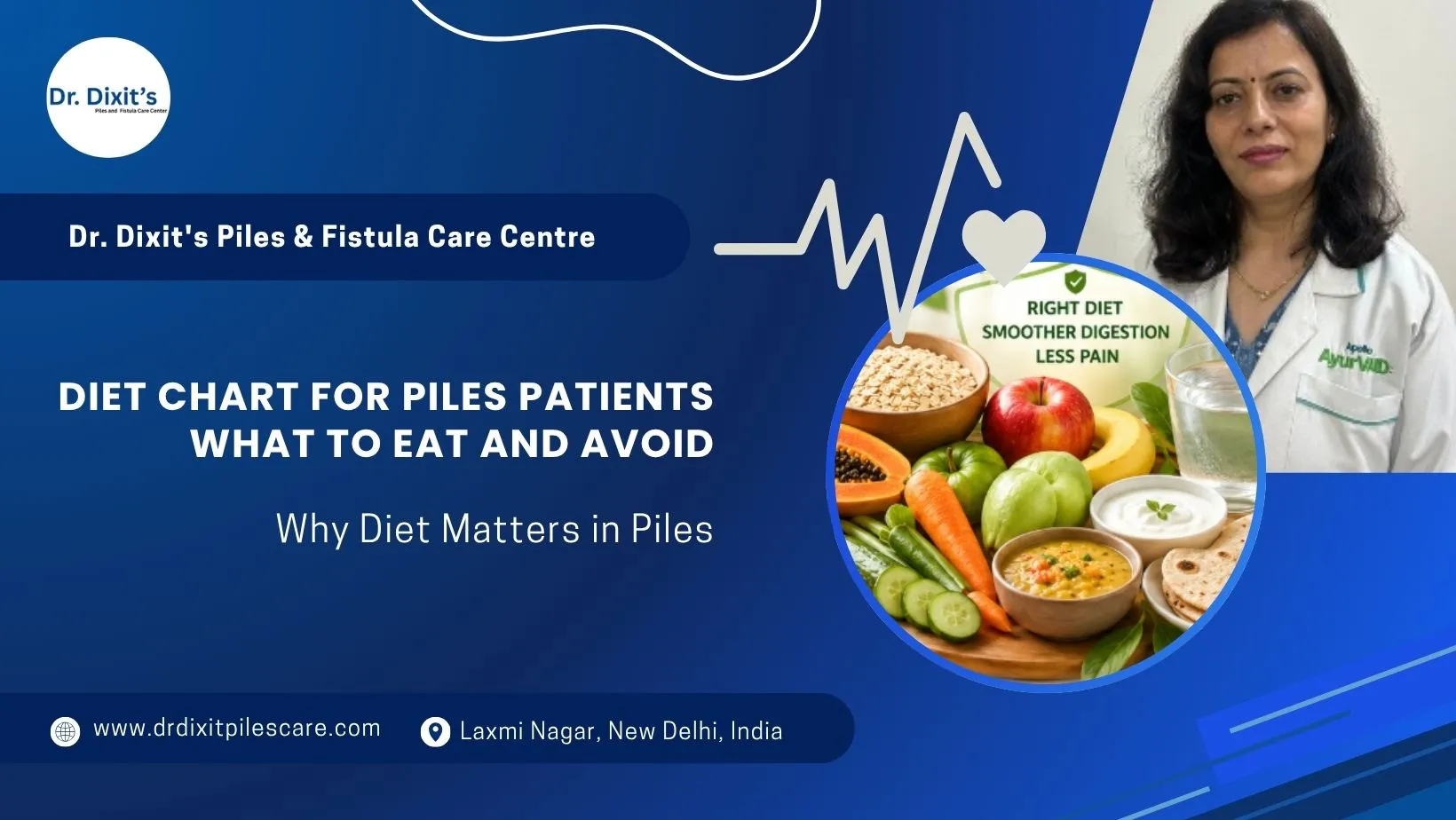
Unhealthy eating habits increase the discomfort and pain of piles. The main reasons for worsening pile symptoms include constipation, hard stools and poor digestion. The proper dietary guidelines enable better digestion and create less harmful effects on the body, and help with smoother bowel movements.
Patients who receive treatment from the best doctor for pile treatment and those who undergo ayurvedic fistula treatment in Delhi should eat a balanced diet that contains plenty of fiber to improve their recovery process and digestive system health.
Why Diet Matters in Piles
Food directly affects digestion and bowel movement. A poor diet can lead to constipation, which increases pressure during bowel movements and worsens piles symptoms. A proper diet helps:
- Soften stools naturally
- Reduce strain during bowel movement
- Improve digestion
- Reduce pain and discomfort
What to Eat for Piles
Eating the right foods plays an important role in managing piles and improving digestion. A balanced diet which contains adequate fiber and fluid intake will lead to stool softening and constipation prevention and bowel movement discomfort reduction. The following foods serve as standard dietary recommendations for patients who suffer from piles.
1. High-Fiber Foods
Fiber helps improve digestion and prevents constipation. Include:
- Oats
- Brown rice
- Whole wheat roti
- Dal and beans
A fiber-rich diet supports smoother bowel movements and reduces pressure on the anal area.
2. Fresh Fruits
Fruits are important for digestion and hydration. Best options include:
- Papaya
- Apple
- Banana
- Pear
- Guava
These fruits are easy to digest and help maintain regular bowel habits.
3. Green Vegetables
Vegetables provide fiber and essential nutrients. Include:
- Spinach
- Lauki
- Tori
- Carrot
- Cucumber
Light and easily digestible vegetables are especially helpful for piles patients.
4. Plenty of Water
Drinking enough water is extremely important. Lack of hydration can make stools hard and worsen constipation.
Try to:
- Drink 8–10 glasses of water daily
- Include coconut water or buttermilk
- Stay hydrated throughout the day
5. Probiotic Foods
Foods that support gut health can improve digestion. Include:
- Curd
- Buttermilk
- Homemade yogurt
These help maintain better digestive balance and reduce discomfort.
Foods to Avoid in Piles
Certain foods and lifestyle habits can make piles symptoms worse by affecting digestion and increasing constipation. The process of recovery needs support from both dietary changes and the elimination of trigger foods, together with unhealthy practices.
Here are some foods and habits that patients with piles should try to limit or avoid.
1. Spicy and Oily Food
Excess spicy food can irritate the digestive system and increase discomfort.
Avoid:
- Fried snacks
- Heavy curries
- Excess chilli and masala
2. Junk and Processed Food
Burgers and French fries are low in fiber and not so easy to digest. Eating these kinds of foods often can make the constipation and hemorrhoids problems even worse.
3. Excess Tea and Coffee
Too much caffeine may lead to dehydration, which can make bowel movements difficult.
4. Alcohol and Smoking
These habits affect digestion and may worsen inflammation and discomfort.
Simple Daily Diet Routine for Piles Patients
Piles require dietary patterns that must be followed, as these patterns serve as an essential treatment for both his condition and piles. The practice of consuming light meals high in fiber throughout the day serves two purposes. The following diet plan provides an easy-to-follow daily eating schedule which enables patients with piles to maintain their dietary needs.
|
Time |
Recommended Foods |
|
Morning |
Warm water, papaya, or soaked raisins |
|
Breakfast |
Oats or poha with vegetables |
|
Lunch |
Dal, roti, green vegetables, and salad |
|
Evening |
Coconut water or fresh fruits |
|
Dinner |
Light homemade food with less oil and spice |
A simple and balanced diet routine helps improve digestion, supports smoother bowel movements, and may help reduce piles discomfort.
Ayurvedic Support for Better Recovery
Many patients who seek long-term relief through Ayurvedic treatment also choose to follow their dietary recommendations. The clinics in Delhi that provide ayurvedic fistula treatment recommend patients to follow three treatments which include proper diet, lifestyle correction, and herbal support for better digestive health. The Best Doctor For Fistula Treatment provides patients with proper treatment guidance which depends on their specific medical condition and symptoms.
Also Read:
7 Ayurvedic Treatment Tips for Piles in Delhi: Summer Care & Best Foods That Work Fast
Fastest Way to Cure Piles Naturally and Permanently
Conclusion
A healthy diet is one of the most important factors that can help treat piles and boost digestion. In combination with drinking plenty of water, eating foods that contain fiber can help alleviate discomfort and make it easier to have a bowel movement; foods that are spicy or processed should be avoided. With a proper diet chart for piles patients and a healthy lifestyle, one can get rid of piles forever and take care of their digestive health.
FAQs
What foods are best for piles patients?
Fiber-rich foods like fruits, vegetables, oats, and whole grains are considered best for piles patients.
Can spicy food worsen piles?
Yes, spicy and oily food may increase irritation and discomfort in some patients.
How much water should piles patients drink?
It is generally recommended to drink at least 8–10 glasses of water daily.
Does diet help in fistula recovery?
Yes, a healthy diet supports digestion and may help improve recovery during treatment.