
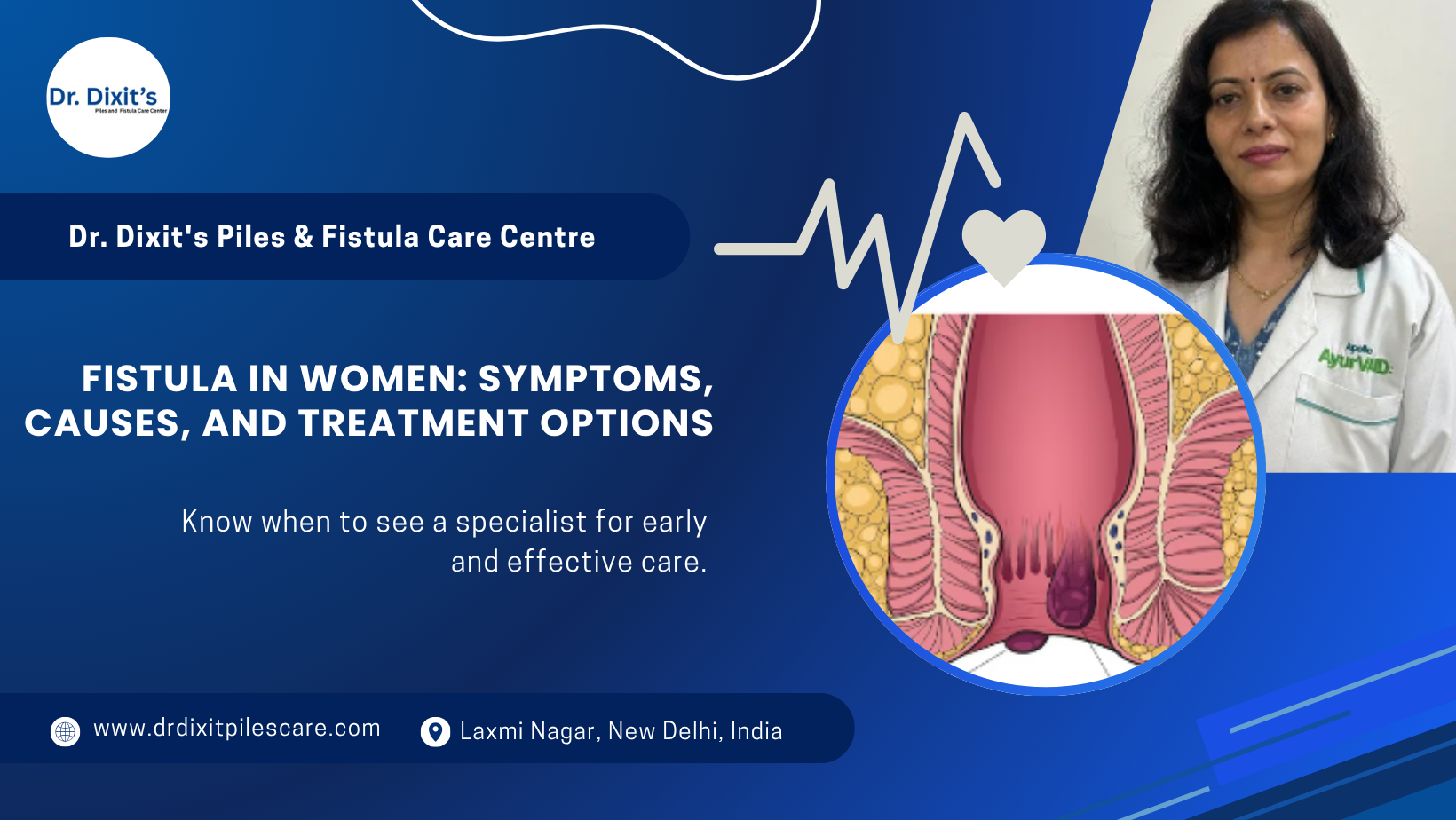
Anal fistula is often thought of as a condition that affects men more commonly, but fistula in women is also a serious health problem that should never be ignored. Many women mistake the early signs for piles, a boil, or a minor skin infection, which delays diagnosis and allows the infection to worsen. In most cases, an anal fistula develops after an abscess near the anus does not heal properly.
When this happens, a small tunnel remains under the skin and continues to cause pain, discharge, and repeated infection. If you are searching for fistula treatment for women, female fistula treatment, or the best doctor for fistula treatment, understanding the symptoms, causes, and treatment options is the first step toward recovery. Early medical attention can prevent complications and make treatment much easier.
Understanding Anal Fistula in Women
An anal fistula is an abnormal passage that forms between the anal canal and the skin around the anus. It usually begins with an infection in one of the small glands inside the anal canal. When the gland becomes blocked, pus collects and forms an abscess. If the abscess drains but does not heal completely, a fistula tract may develop.
Although this condition is often discussed in men, women can also develop it at any age. In fact, many women do not realise they have a fistula because the symptoms may seem mild at first or may resemble other common anorectal problems. Repeated infections, inflammatory bowel disease, previous surgery, or poor healing after an abscess can all increase the risk.
Common Symptoms Every Woman Should Watch For
The early signs of anal fistula may be easy to overlook, but they usually become more noticeable over time. Some women feel constant discomfort around the anus, while others notice discharge or swelling that keeps returning. Common anal fistula symptoms in women include pain while sitting, walking, or passing stools, swelling or redness near the anal opening, pus or blood discharge, itching, irritation, and a foul smell from the affected area. Some women may also notice a small opening near the anus that keeps leaking fluid. If the infection becomes active, fever and increased tenderness may also occur. These symptoms should not be ignored, especially if they keep coming back after temporary relief. Early evaluation by a specialist can help prevent the fistula from becoming more complex.
Why Does Fistula Develop in Women?
The causes of fistula in women are usually linked to infection. In most cases, the problem starts when an anal gland becomes blocked and infected. This leads to abscess formation. If the abscess does not heal fully, the infection may create a tunnel between the anal canal and the skin. Certain health conditions can increase the risk of fistula formation. These include Crohn's disease, tuberculosis, diabetes, recurrent anal abscesses, previous anorectal surgery, chronic infections, and weakened immunity. In some women, repeated constipation or frequent diarrhoea may also irritate the area and contribute to infection. Understanding the underlying cause is important because it helps the doctor choose the right treatment and reduce the chances of recurrence.
Why Women Should Never Ignore Anal Fistula Symptoms
Many women delay treatment because they feel embarrassed discussing problems in the anal region. Others assume the symptoms will go away on their own. Unfortunately, an untreated fistula rarely heals without proper medical care. When treatment is delayed, the infection can spread deeper into the surrounding tissues. This may lead to repeated abscess formation, persistent pus discharge, severe pain, and the development of multiple fistula tracts. Complex fistulas are harder to treat and may require longer recovery time. Seeking help early often leads to better results, less discomfort, and a smoother healing process. That is why timely consultation is so important for women experiencing symptoms of fistula.
How Doctors Diagnose an Anal Fistula
Diagnosis usually begins with a detailed discussion about your symptoms, medical history, and any previous infections or surgeries. The doctor then performs a physical examination of the affected area to look for swelling, discharge, tenderness, or an external opening. In some cases, additional tests may be needed to understand the exact path of the fistula tract. MRI and endoanal ultrasound are commonly used imaging tests that help doctors see how deep or complex the fistula is. This information is very useful because every fistula is different, and treatment must be planned according to its location and severity. Accurate diagnosis is the foundation of successful treatment and helps reduce the risk of recurrence.
Treatment Options Available for Women
The choice of female fistula treatment depends on several factors, including the type of fistula, its location, the severity of infection, and the patient’s overall health. There is no single treatment that suits everyone, which is why a personalised approach is important. Treatment options may include conventional surgery, fistulotomy, seton placement, or specialised Ayurvedic treatment for fistula in women such as Ksharsutra therapy in suitable cases. The main goals of treatment are to remove the infection, close the fistula tract, preserve bowel control, and prevent the problem from returning.
In many cases, early treatment means a simpler procedure and faster recovery. Delaying care can make the fistula more complicated and increase the chances of repeated infection.
Can Ayurvedic Treatment Help Women with Anal Fistula?
Many patients today are interested in Ayurvedic treatment for fistula in women because it offers a different approach for selected cases. One of the most well-known Ayurvedic methods is Ksharsutra therapy. This treatment uses a specially prepared medicated thread that is placed in the fistula tract under medical supervision. The thread gradually helps clean and heal the tract over time.
Ksharsutra therapy may be suitable for certain types of fistulas, but it is not the right option for every patient. The best treatment depends on the size, depth, and complexity of the fistula, along with the patient’s overall condition. A consultation with an experienced specialist is the best way to determine whether Ayurvedic treatment is appropriate.
Choosing the Right Fistula Specialist in Delhi
Successful treatment depends not only on the procedure but also on choosing the right doctor. If you are looking for fistula treatment in Delhi, a female fistula specialist in Delhi, the best fistula doctor in Delhi, or anal fistula treatment in Laxmi Nagar, it is important to choose a clinic that has experience in treating anorectal disorders. An experienced specialist will carefully examine your symptoms, explain the available treatment options, and recommend the most suitable plan for your condition. Personalised care can make a major difference in healing, comfort, and long-term results.
Conclusion
Anal fistula is a condition that should never be ignored, especially when symptoms continue for several days or keep returning. Persistent pain, swelling, pus discharge, or repeated abscesses around the anus are warning signs that need medical attention. The earlier the condition is diagnosed, the easier it is to treat and the lower the risk of complications. If you are experiencing symptoms of fistula, do not delay consultation. Timely treatment can improve recovery, reduce discomfort, and help you return to your normal routine with confidence.
Frequently Asked Questions
What are the first signs of fistula in women?
The first signs usually include pain near the anus, swelling, redness, pus discharge, recurrent boils, irritation, and discomfort while sitting or passing stools. Some women may also notice a foul smell or a small opening that keeps leaking fluid. These symptoms should be checked by a specialist as early treatment can prevent the condition from worsening.
What causes fistula in females?
Most anal fistulas in females develop after an infected anal gland forms an abscess. If the abscess does not heal properly, a fistula tract may form. Conditions such as Crohn's disease, diabetes, tuberculosis, previous anorectal surgery, and recurrent infections can also increase the risk.
Can a fistula heal without surgery?
Most anal fistulas do not heal permanently on their own because the abnormal tunnel remains under the skin. Medicines may reduce pain or infection temporarily, but they usually do not close the tract completely. Depending on the case, treatment may involve surgery or specialised Ayurvedic procedures such as Ksharsutra therapy.
Is fistula common in women?
Anal fistula is more commonly reported in men, but women can also develop the condition. It is not rare, and many women delay treatment because they mistake the symptoms for piles or a skin infection. Early diagnosis is important to avoid complications.
How is fistula diagnosed in women?
Doctors diagnose anal fistula through a physical examination, review of symptoms, and imaging tests such as MRI or ultrasound when needed. These tests help identify the exact path of the fistula and guide the treatment plan.
What is the best treatment for fistula in women?
The best treatment depends on the type, location, and severity of the fistula. Options may include conventional surgery or Ayurvedic treatment for fistula in women, such as Ksharsutra therapy, depending on the patient’s condition and the specialist’s evaluation.