
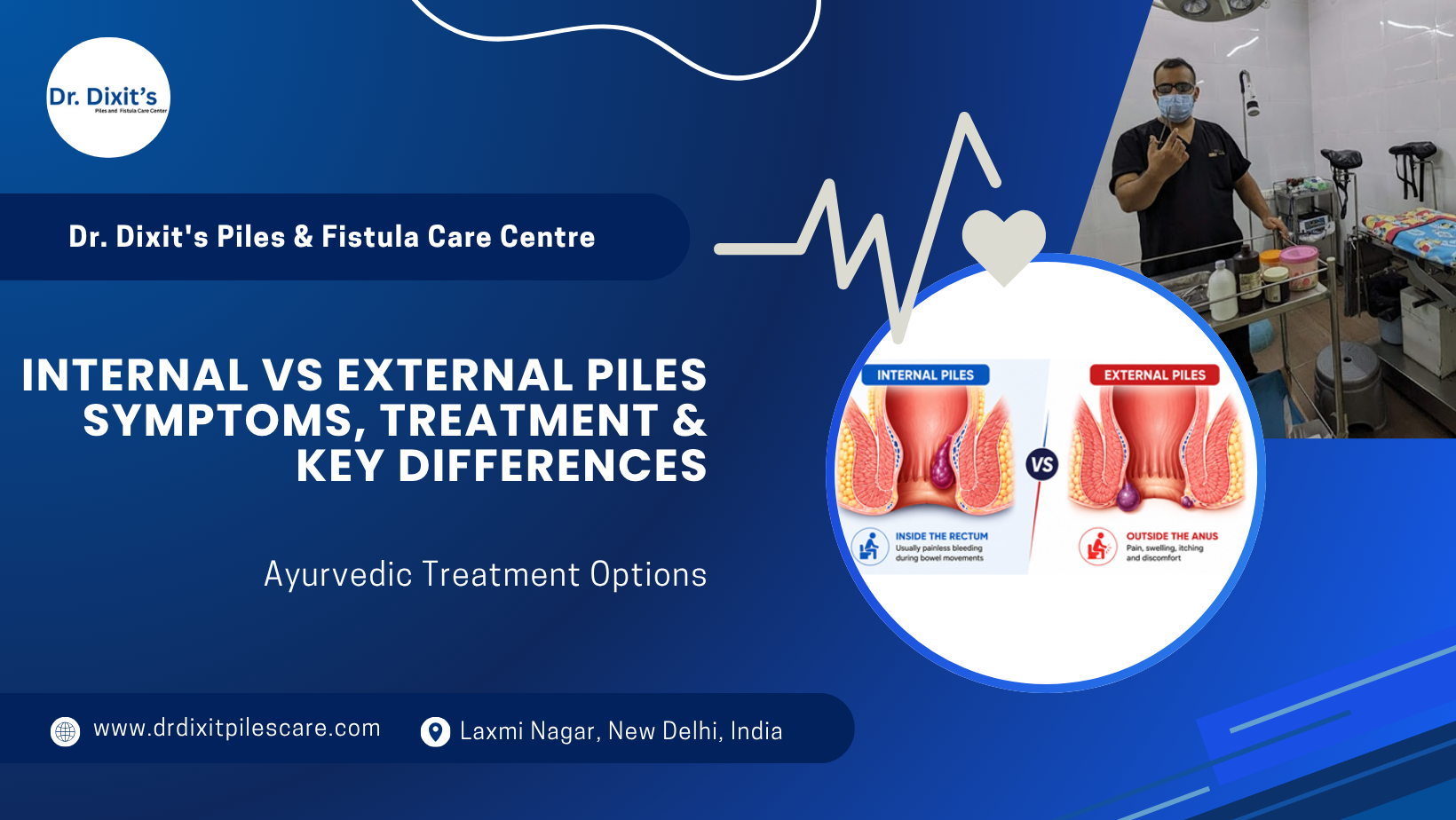
Piles, also known as hemorrhoids, are one of the most common anorectal conditions affecting people of all ages. They develop when the veins in or around the rectum and anus become swollen due to increased pressure. While many people know about piles, they often do not realise that there are different types of piles. The two main types are internal piles and external piles, and each has different symptoms, severity, and treatment options.
Understanding the difference between internal and external piles can help you recognise the condition early and seek the right treatment before complications develop. If you are searching for internal vs external hemorrhoids, internal piles treatment, external piles treatment, or Ayurvedic treatment for piles, this guide explains everything in simple and easy-to-understand language.
Understanding the Different Types of Piles
Piles are generally classified based on their location inside or outside the anal canal. This classification helps doctors determine the severity of the condition and recommend the most suitable treatment.
Internal piles develop inside the rectum and are usually not visible from outside. Since there are fewer pain-sensitive nerves inside the rectum, they often remain painless during the early stages. However, they may cause bleeding during bowel movements or gradually protrude outside the anus if left untreated.
External piles, on the other hand, develop under the skin around the anus. Because this area contains many nerve endings, external piles are more likely to cause pain, swelling, itching, and discomfort, especially while sitting or passing stools. Understanding these types of piles is the first step towards proper diagnosis and treatment.
Internal Piles Symptoms
Many people have internal piles without realising it because the symptoms are usually mild in the beginning. As the condition progresses, the symptoms become more noticeable. The most common internal piles symptoms include painless bleeding during bowel movements, bright red blood on toilet paper, mucus discharge, and a feeling that the bowel has not emptied completely.
Some patients may also experience prolapsing piles, where the swollen tissue comes out during bowel movements and goes back inside on its own or needs to be pushed back manually.
Since internal piles usually do not cause pain initially, many patients ignore the early signs until bleeding becomes frequent or the piles become larger.
External Piles Symptoms
Unlike internal piles, external piles symptoms are usually easier to notice because they affect the skin around the anus. The condition can interfere with daily activities due to discomfort and irritation. Common symptoms include swelling around the anus, pain while sitting, itching, burning sensation, tenderness, and discomfort during bowel movements.
In some cases, a blood clot may develop inside the external pile, leading to a thrombosed hemorrhoid that causes sudden severe pain and a hard lump near the anus. Because external piles are exposed to friction from clothing and prolonged sitting, patients often seek medical advice earlier than those with internal piles.
Internal vs External Piles – What Is the Difference?
Although both conditions involve swollen veins around the anal region, there are important differences between internal vs external hemorrhoids.
Internal piles develop inside the rectum and often cause painless bleeding. They are usually not visible unless they prolapse outside the anus during bowel movements. External piles develop around the anal opening and are more likely to cause pain, swelling, itching, and irritation because they occur in an area rich in nerve endings. Another important difference is the patient's experience.
Internal piles may remain unnoticed for months because they rarely hurt in the early stages, whereas external piles usually cause immediate discomfort that prompts patients to seek treatment sooner. Knowing the difference between internal and external piles helps doctors recommend the most appropriate treatment plan.
How to Identify Internal and External Piles
Many people wonder how to identify internal and external piles, especially because some symptoms overlap. While only a medical examination can confirm the diagnosis, there are certain signs that may help. If your main symptom is painless bleeding during bowel movements without significant pain, internal piles may be responsible. If you notice pain, itching, swelling, or a lump around the anus, external piles are more likely.
However, some patients may develop both internal and external piles at the same time. Since several anorectal conditions such as fissures, fistulas, or rectal polyps can produce similar symptoms, self-diagnosis should be avoided. A proper examination by a specialist ensures accurate diagnosis and timely treatment.
Treatment Options for Internal Piles
The choice of internal piles treatment depends on the stage of the disease and the severity of symptoms. Early-stage internal piles often improve with conservative treatment and lifestyle modifications. Doctors generally recommend increasing fibre intake, drinking adequate water, avoiding prolonged straining during bowel movements, and maintaining regular physical activity. Medicines may also help relieve symptoms in selected patients.
If internal piles become enlarged, prolapse frequently, or cause repeated bleeding, advanced treatment may be recommended. Early consultation often helps avoid complications and allows for more effective management.
Treatment Options for External Piles
External piles treatment focuses on relieving pain, reducing swelling, and preventing further irritation. Mild cases may improve with dietary changes, proper hydration, warm sitz baths, and good anal hygiene.
When external piles become thrombosed or extremely painful, specialised treatment may be required. Seeking medical attention at an early stage helps reduce discomfort and prevents the condition from becoming more severe.
The best treatment depends on the patient's symptoms, the size of the piles, and the overall condition of the anorectal region.
Can Piles Be Treated Without Surgery?
One of the most common concerns among patients is whether piles treatment without surgery is possible. The answer depends on the stage of the disease. Many patients with early or moderate piles can benefit from dietary changes, lifestyle improvements, medicines, and specialised non-surgical treatment options. Early diagnosis increases the chances of successful treatment without extensive procedures. Ignoring symptoms for a long time may allow piles to become larger or more complicated, making advanced treatment necessary. Consulting a specialist at the right time often provides more treatment options.
Ayurvedic Treatment for Piles
Many patients today choose Ayurvedic treatment for piles because it focuses on managing the condition while improving digestive health and bowel habits. Depending on the patient's condition, Ayurvedic management may include medicines, dietary guidance, lifestyle modifications, and specialised procedures such as Ksharsutra or Kshar Karma in suitable cases. The treatment plan varies from one patient to another based on the type and severity of piles. A detailed consultation helps determine the most appropriate approach while aiming for long-term relief and reducing the chances of recurrence.
When Should You Consult a Piles Specialist?
Bleeding during bowel movements, persistent pain, itching, swelling, or a lump around the anus should never be ignored. Although these symptoms are commonly caused by piles, they can also indicate fissures, fistulas, rectal polyps, or other medical conditions. Seeking medical advice early allows the doctor to identify whether you have internal or external piles and recommend the most appropriate treatment. Timely diagnosis often leads to better recovery and helps prevent complications.
Conclusion
Understanding the difference between internal and external piles is important because each type has different symptoms and treatment approaches. Internal piles usually cause painless bleeding, while external piles are more likely to cause pain, swelling, and discomfort around the anus.
If you notice any symptoms of piles, avoid self-diagnosis or delaying treatment. Early consultation with an experienced specialist can help identify the condition accurately and recommend the most suitable treatment. Whether you are looking for internal piles treatment, external piles treatment, piles treatment without surgery, or Ayurvedic treatment for piles, timely medical care plays an important role in achieving better long-term outcomes.
Frequently Asked Questions
What is the difference between internal and external piles?
Internal piles develop inside the rectum and usually cause painless bleeding during bowel movements. External piles develop around the anus and are more likely to cause pain, swelling, itching, and discomfort because they occur in an area with many nerve endings.
Which is more painful, internal or external piles?
External piles are generally more painful because they develop under the skin around the anus, where many pain-sensitive nerves are present. Internal piles often remain painless until they prolapse or develop complications.
How do I know if I have internal or external piles?
Painless bleeding during bowel movements often suggests internal piles, while pain, swelling, itching, or a lump around the anus is more commonly associated with external piles. A medical examination is the best way to confirm the diagnosis.
Can internal piles become external?
Internal piles can enlarge and prolapse outside the anus over time. Although they remain internal in origin, prolapsed piles may extend outside the anal opening and require medical evaluation.
Are external piles more dangerous than internal piles?
Neither type is necessarily more dangerous, but both require proper diagnosis and treatment. External piles usually cause more discomfort, while internal piles may lead to repeated bleeding if left untreated.
How to treat internal piles at home?
Mild internal piles may improve with a high-fibre diet, adequate water intake, regular exercise, avoiding prolonged straining, and maintaining healthy bowel habits. Persistent symptoms should be evaluated by a doctor.
How to treat external piles naturally?
Natural measures such as eating fibre-rich foods, drinking enough water, taking warm sitz baths, maintaining good hygiene, and avoiding prolonged sitting may help relieve mild external piles. If pain or swelling persists, medical consultation is recommended.