
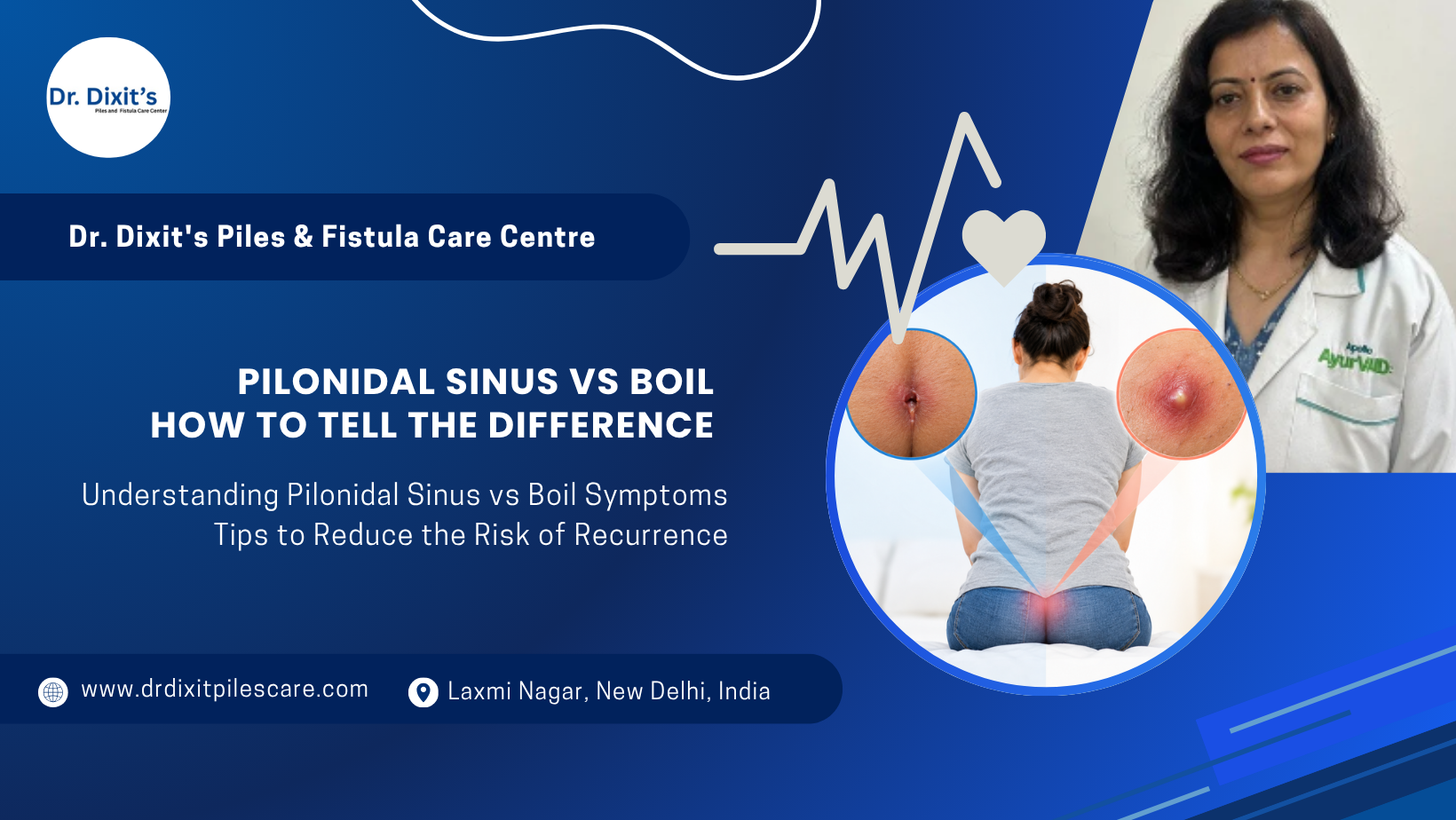
A painful lump near the tailbone can be confusing. Many people assume it is just a boil, while others worry it could be a pilonidal sinus. Although both conditions can cause pain, swelling, and pus, they are not the same. Understanding the difference between a pilonidal sinus and a boil is important because the treatment and the chances of the problem returning can be very different. A simple boil may heal with proper medical care, but a pilonidal sinus can develop into a recurring condition if it is not treated properly. Knowing the warning signs can help you seek timely medical advice and avoid repeated infections. If you are searching for pilonidal sinus vs boil, pilonidal cyst vs boil, or how to tell if it is a pilonidal sinus or boil, this guide explains everything in simple language.
Why Pilonidal Sinus and Boils Are Often Confused
At first glance, both conditions can look similar. They may appear as a painful swelling with redness, warmth, and even pus discharge. Since they often occur near the buttock area, many people mistake one for the other. The biggest difference is that a boil is usually a temporary skin infection, while a pilonidal sinus is a tunnel that forms under the skin near the tailbone. A pilonidal sinus can trap hair and debris, making it more likely to become infected repeatedly. This is why recognising the difference between pilonidal sinus and a boil early is important for choosing the right treatment.
What Is a Pilonidal Sinus?
A pilonidal sinus is a small tunnel or cavity that develops under the skin, usually at the top of the buttock crease near the tailbone. Hair, dead skin cells, and dirt can collect inside this tunnel, leading to irritation and infection. The condition is more common in young adults, especially people who sit for long hours, have thick body hair, or experience frequent friction around the tailbone. Once infected, a pilonidal sinus may cause swelling, pain, and pus discharge. Unlike a simple skin infection, it often has a higher chance of returning if the underlying sinus is not properly managed. Many people first notice the problem as a painful lump, which is why it is frequently confused with a boil during the early stages.
What Is a Boil?
A boil is a bacterial infection that affects a hair follicle or an oil gland. It usually starts as a small red bump that gradually becomes swollen, painful, and filled with pus. Boils can appear almost anywhere on the body, including the face, neck, thighs, armpits, or buttocks.
Unlike a pilonidal sinus, a boil is generally a single skin infection rather than an underground tunnel. Once the infection clears with appropriate treatment, the boil usually heals completely without leaving a permanent tract beneath the skin. Although both conditions involve infection, their causes and long-term management are different.
Pilonidal Sinus vs Boil Symptoms
Both conditions can look similar in the beginning, but their symptoms have some important differences that can help identify the underlying problem.
|
Pilonidal Sinus Symptoms |
Boil Symptoms |
|
Painful lump near the tailbone |
Red, tender bump on the skin |
|
Swelling in the buttock crease |
Swollen area that gradually fills with pus |
|
Pus or blood discharge from a small opening |
Pus discharge from a single infected bump |
|
Recurring infections in the same area |
Usually heals after treatment |
|
Pain while sitting or walking |
Pain mainly around the infected area |
|
May have multiple small openings |
Does not usually form an underground tract |
|
Fever may occur if the infection becomes severe |
Fever is less common unless the infection spreads |
If the swelling keeps returning in the same spot near the tailbone, it is more likely to be a pilonidal sinus than a simple boil, and it should be evaluated by a specialist.
How to Tell If It Is a Pilonidal Sinus or Boil
Many people ask how to tell if it is a pilonidal sinus or boil, especially when they notice pain near the tailbone. While only a medical examination can confirm the diagnosis, certain features may help you understand the difference.
If the lump is located exactly at the top of the buttock crease, has tiny openings in the skin, repeatedly drains pus, or returns after healing, a pilonidal sinus becomes more likely. If the swelling appears suddenly, forms a single pus-filled bump, and heals completely after treatment, it is more likely to be a boil. Since both conditions can become infected, it is important not to squeeze or puncture the swelling at home. Professional evaluation helps prevent complications and ensures appropriate treatment.
Pilonidal Cyst vs Boil
The terms pilonidal cyst and pilonidal sinus are often used interchangeably, but there is a slight difference. A pilonidal cyst is the closed pocket that forms beneath the skin, while a pilonidal sinus is the tract or tunnel that may develop from it. Compared to a boil, a pilonidal cyst is usually linked to trapped hair beneath the skin rather than a simple bacterial infection of a hair follicle. Once infected, both may look similar, but a pilonidal cyst has a greater tendency to become a recurring problem if the underlying tract remains. Understanding the difference between pilonidal cyst vs boil helps patients avoid assuming every painful lump is the same condition.
What Causes These Conditions?
While both conditions involve infection, their causes are different, and understanding these differences can help with early identification and prevention.
|
Pilonidal Sinus Causes |
Boil Causes |
|
Trapped hair beneath the skin |
Bacterial infection of a hair follicle |
|
Friction around the tailbone |
Skin irritation |
|
Long hours of sitting |
Excess sweating |
|
Excess body hair |
Minor cuts or skin damage |
|
Poor hygiene |
Weakened immunity in some cases |
|
Obesity |
Blocked oil glands in some cases |
Recognising these causes can help you take preventive steps, especially if you are prone to recurring pilonidal sinus or repeated skin infections.
Can a Boil Turn Into a Pilonidal Sinus?
This is a common question because both conditions may begin with swelling and pain. A regular boil does not usually turn into a pilonidal sinus. However, an infected pilonidal sinus may initially look exactly like a boil, especially during its first flare-up. This is why some patients are treated repeatedly for boils before the underlying pilonidal sinus is finally diagnosed. If the swelling keeps returning in the same location, further evaluation is important.
How Doctors Diagnose Pilonidal Sinus
Diagnosis usually begins with a physical examination. An experienced specialist looks for signs such as small skin openings, recurring discharge, swelling near the tailbone, and the exact location of the lump. Additional investigations are not always required, but they may be recommended in certain cases to understand the extent of the condition. Early diagnosis allows appropriate treatment before repeated infections make the problem more complicated. If you notice recurring swelling near the tailbone, it is better to consult a specialist rather than repeatedly treating it as a simple boil.
Pilonidal Sinus Treatment
The most suitable pilonidal sinus treatment depends on whether the condition is mild, infected, or recurrent. Early medical care may help prevent repeated infections and improve recovery. Treatment options are planned according to the patient's symptoms and clinical condition. In suitable cases, management may include medicines, wound care, lifestyle guidance, or specialised Ayurvedic treatment under medical supervision. Good hygiene, regular follow-up, and proper wound care are important parts of recovery regardless of the treatment approach.
Pilonidal Sinus Treatment in Delhi
If you are looking for pilonidal sinus treatment in Delhi, choosing an experienced anorectal specialist is important because recurring infections require proper diagnosis and personalised care. At Dr. Dixit Piles & Fistula Care Centre, patients receive evaluation and treatment planning for pilonidal sinus based on their individual condition. The clinic also provides guidance on hygiene, recovery, and long-term prevention to help reduce the chances of recurrence. Early consultation can make a significant difference, especially for people experiencing repeated swelling or discharge near the tailbone.
Tips to Reduce the Risk of Recurrence
Simple daily habits can help reduce irritation around the tailbone and lower the chances of recurring pilonidal sinus after treatment or recovery.
-
Keep the area clean and dry: Wash the tailbone area regularly, dry it thoroughly after bathing, and reduce moisture that can encourage irritation and infection.
-
Avoid prolonged sitting: Take short breaks every 30 to 60 minutes, stand up, stretch, and reduce constant pressure on the tailbone throughout the day.
-
Wear loose, breathable clothing: Choose comfortable cotton clothing that reduces friction, allows better airflow, and helps prevent excessive sweating around the affected area.
-
Maintain a healthy body weight: A balanced diet and regular physical activity can reduce pressure around the tailbone and support overall skin health and healing.
-
Follow proper wound care after treatment: Clean and dress the treated area as advised by your doctor to promote healing and reduce the risk of recurring infection.
-
Attend follow-up appointments: Regular check-ups allow your doctor to monitor healing, identify early signs of recurrence, and recommend timely care when needed.
Following these preventive measures consistently can support long-term recovery and help reduce the likelihood of recurring pilonidal sinus problems.
Conclusion
Although a pilonidal sinus vs boil may look similar in the beginning, they are different conditions that require different treatment approaches. A boil is usually a temporary skin infection, while a pilonidal sinus is an underlying tunnel beneath the skin that can become infected repeatedly if left untreated. If you notice a painful lump near your tailbone that keeps returning, drains pus, or causes discomfort while sitting, do not ignore it. Early diagnosis and the right pilonidal sinus treatment can help prevent repeated infections and support better recovery.
Frequently Asked Questions
What is the main difference between pilonidal sinus and a boil?
The biggest difference is that a boil is a temporary skin infection of a hair follicle, while a pilonidal sinus is an underground tunnel near the tailbone that can trap hair and become infected repeatedly.
How can I tell if I have a pilonidal sinus or a boil?
A recurring painful lump near the tailbone with small skin openings or repeated pus discharge is more likely to be a pilonidal sinus. A boil usually appears as a single swollen bump that heals after treatment.
Can a pilonidal sinus heal on its own?
Some symptoms may temporarily improve, but the underlying sinus may remain. Professional evaluation is important because recurring infections often require appropriate treatment.
Is a pilonidal cyst the same as a boil?
No. A pilonidal cyst develops beneath the skin near the tailbone and may form a sinus tract, while a boil is usually a bacterial infection of a hair follicle.
When should I see a doctor for a painful lump near the tailbone?
You should seek medical advice if the swelling becomes painful, repeatedly returns, drains pus or blood, causes fever, or makes sitting uncomfortable. Early diagnosis can help prevent complications.