
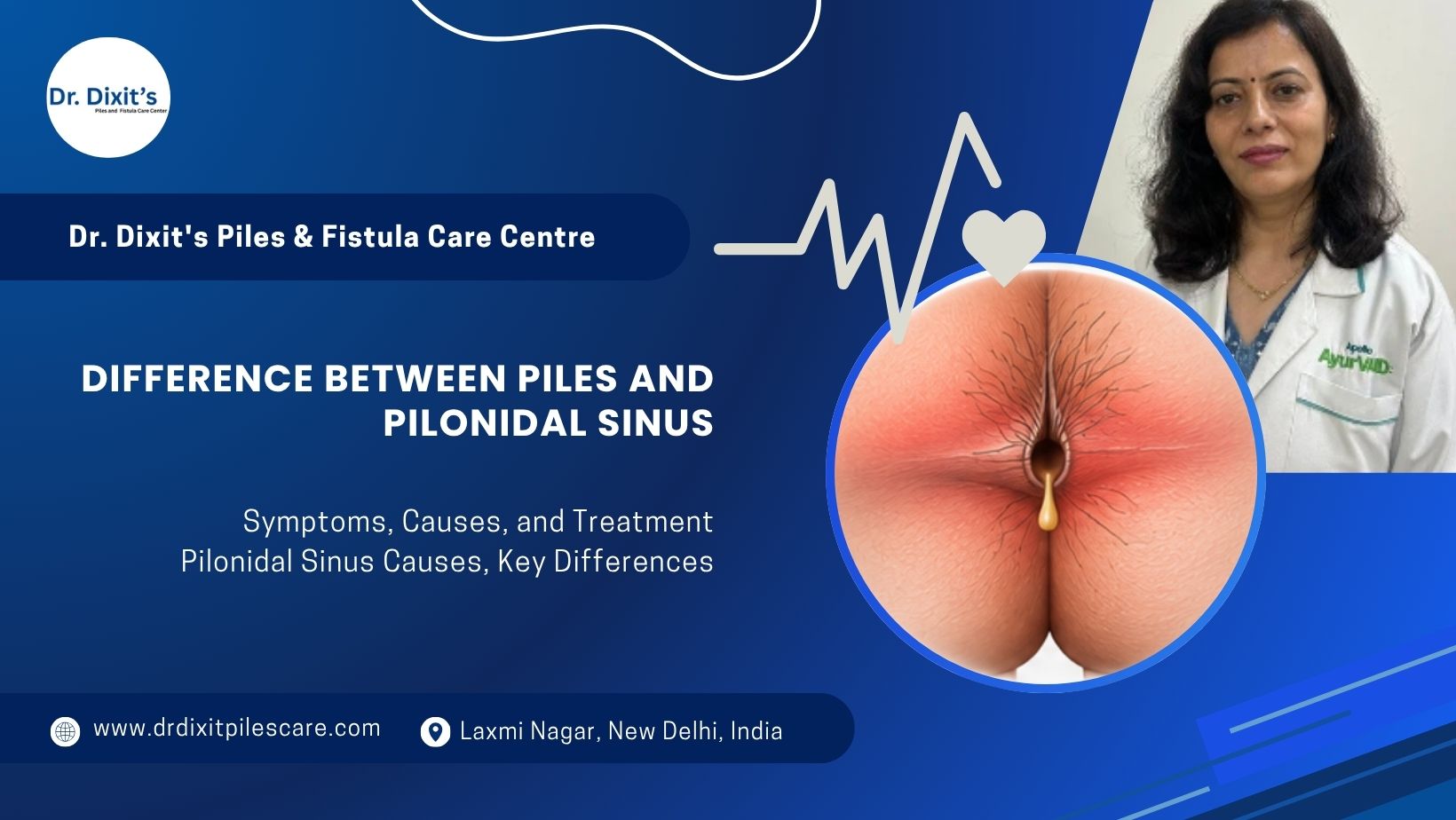
A lot of people suffering from pain, swelling, or discomfort around their anus normally think that it is an ailment known as piles. Nevertheless, all swelling, lumps, or pain around the butt region may not be caused by piles. The most common confusion occurs with the condition called Pilonidal Sinus.
The distinction between Pilonidal Sinus and Piles is very important due to the reason that they affect different parts of the body, arise from various factors, and are treated differently. For those who want to know whether piles and Pilonidal Sinus are the same, read the following article.
What Are Piles?
Also referred to as hemorrhoids, piles involve swellings that arise from the veins in the anus and the rectal area. They arise because of too much pressure exerted during defecation or sitting for long periods. Other factors include constipation and obesity.
Common Piles Symptoms
- Bleeding during bowel movements
- Pain or discomfort while passing stool
- Itching around the anus
- Swelling near the anal opening
- Feeling of incomplete bowel evacuation
- A lump around the anus
Many patients with bleeding piles initially believe any pain near the buttocks is related to hemorrhoids, which is not always the case.
What Is Pilonidal Sinus? Symptoms, Causes, and Treatment
Pilonidal sinus is a small tract or hole that occurs in the skin surrounding the tailbone area, generally near the base of the cleft of the buttocks. Pilonidal sinuses generally contain hairs, debris, and infection.
They differ from piles since they are not associated with the rectum and anal veins. They are viewed as a skin disorder that mostly occurs in young adults.
Pilonidal Sinus Symptoms
The most common pilonidal sinus symptoms include:
- Pain near the tailbone
- Swelling between the buttocks
- Redness around the affected area
- Pus discharge near buttocks
- Foul-smelling drainage
- Difficulty sitting comfortably
- Fever in severe infections
Many people search for pain near tailbone not piles because the symptoms can initially seem confusing.
Pilonidal Sinus Causes
Several factors can contribute to the development of a pilonidal sinus:
- Ingrown hairs
- Friction in the buttock area
- Prolonged sitting
- Excessive sweating
- Obesity
- Repeated irritation of the skin
- Family history
These factors are completely different from the causes of piles.
Pilonidal Sinus vs Piles: Key Differences
Although both conditions affect the lower body region, they are entirely different disorders.
|
Feature |
Piles (Hemorrhoids) |
Pilonidal Sinus |
|
Location |
Inside or around the anus |
Near the tailbone |
|
Cause |
Swollen anal veins |
Hair and skin infection |
|
Bleeding |
Common |
Rare |
|
Pus Discharge |
Usually absent |
Common |
|
Pain While Sitting |
Sometimes |
Frequently severe |
|
Tailbone Pain |
No |
Yes |
|
Infection |
Uncommon |
Common |
|
Relation to Bowel Movements |
Directly related |
Usually unrelated |
This comparison clearly explains the difference between pilonidal sinus and piles.
Is Pilonidal Sinus a Type of Piles?
Not at all. The most common misconception that exists among patients is that pilonidal sinus is a form of piles. While piles occur in the veins surrounding the anus, pilonidal sinus occurs in the skin in the vicinity of the coccyx bone. They both have varying causes, symptoms, and treatments. Thus, if you are wondering whether pilonidal sinus is a form of piles, then the answer is definitely not.
Why Do People Confuse Pilonidal Sinus with Piles?
Patients often confuse the two because both conditions can cause discomfort in the buttock region. Some common reasons include:
- Pain near the anal area
- Swelling near the buttocks
- Difficulty sitting
- Fear of discussing symptoms
- Lack of awareness about pilonidal disease
However, pus discharge near anus causes are often different from piles and may indicate pilonidal sinus or another infection that requires medical evaluation.
Can Piles Cause Pus Discharge?
Generally, piles do not cause pus discharge. If you notice pus, foul-smelling fluid, or recurring infection near the buttocks, it may indicate:
- Pilonidal sinus
- Anal fistula
- Skin infection
- Tailbone abscess
- Coccyx infection
Persistent discharge should never be ignored because it often suggests an underlying infection.
How to Differentiate Piles from Pilonidal Sinus?
A simple way to identify the difference is by looking at the location of symptoms.
Signs More Common in Piles
- Bleeding during bowel movements
- Itching around the anus
- Pain while passing stool
- Swollen veins near the anal opening
Signs More Common in Pilonidal Sinus
- Tailbone pain
- Pus discharge near buttocks
- Swelling between the buttocks
- Recurrent infection
- Pain while sitting
When symptoms overlap, a physical examination by a specialist is the best way to obtain an accurate diagnosis.
Can Pilonidal Sinus Be Cured Permanently Without Surgery?
This can be determined based on the degree and extent of the disease. Milder forms of the disease might, on occasion, respond to good hygiene, hair removal, and infection prevention. In recurrent or chronic cases of Pilonidal Sinus, treatment becomes necessary. Non-surgical treatment for Pilonidal Sinus includes many patients opting for alternative remedies like Ayurveda methods such as the application of Ksharsutra.
Pilonidal Sinus Treatment
The most suitable pilonidal sinus treatment depends on the extent of infection and the complexity of the sinus tract. Treatment options may include:
- Infection management
- Wound care
- Hair removal measures
- Drainage of abscesses
- Ksharsutra therapy in selected cases
- Surgical treatment when required
Prompt treatment helps reduce discomfort and lowers the risk of recurrence.
Hemorrhoids Treatment
Treatment for piles focuses on reducing symptoms and addressing the underlying causes. Common approaches include:
- High-fiber diet
- Increased water intake
- Lifestyle modifications
- Medications
- Ayurvedic treatment
- Kshar Karma
- Ksharsutra therapy for selected cases
The appropriate treatment depends on the grade and severity of the hemorrhoids.
When Should You See a Doctor?
You should seek medical advice if you experience:
- Persistent bleeding
- Recurrent swelling
- Tailbone abscess
- Pus discharge near buttocks
- Severe pain while sitting
- Recurring infections
- Non-healing wounds
Early diagnosis can help prevent complications and ensure proper treatment.
Conclusion
It is essential to know about the difference between pilonidal sinus and piles, since they both impact the body differently and are treated differently too. Piles are caused by enlarged veins in the area of the anus, while pilonidal sinus is an infection of the skin near the tail bone, which causes pain, swelling, and discharge of pus. If you experience symptoms like pain in the tail bone area, swelling of the area near the buttocks, or recurrent discharge, it does not mean that you have piles.
FAQs
How to identify pilonidal sinus and piles?
Piles usually cause bleeding, itching, and discomfort during bowel movements, while pilonidal sinus commonly causes tailbone pain, swelling, and pus discharge near the buttocks.
Difference between hemorrhoids and pilonidal sinus?
Hemorrhoids are swollen veins in the anal region, whereas pilonidal sinus is an infected cavity near the tailbone that often contains hair and debris.
Is pain near the buttocks a sign of piles?
Not always. Pain near the buttocks, especially near the tailbone, may indicate pilonidal sinus rather than piles.
Can pilonidal sinus be mistaken for piles?
Yes. Because both conditions can cause discomfort in the lower body region, many patients initially mistake pilonidal sinus for piles.
Symptoms of pilonidal sinus vs hemorrhoids?
Pilonidal sinus often causes swelling, infection, and pus discharge near the tailbone, while hemorrhoids commonly cause bleeding, itching, and pain during bowel movements.
Why does pus come from the buttock area?
Pus discharge may indicate an infection such as pilonidal sinus, anal fistula, skin abscess, or another underlying condition requiring medical attention.
Best treatment for pilonidal sinus and piles?
Treatment depends on the diagnosis. Piles and pilonidal sinus require different treatment approaches, which may include lifestyle changes, Ayurvedic therapies, Ksharsutra treatment, medications, or surgical procedures depending on severity.
Which doctor treats pilonidal sinus and piles?
An anorectal specialist experienced in treating piles, fistula, fissure, and pilonidal sinus can diagnose the condition and recommend the most suitable treatment plan.
Also Read:
7 Daily Habits to Avoid Constipation and Reduce the Risk of Piles Naturally in India
Best Healthy Diet Chart for Piles Patients
Why Piles Cases Are Increasing Among Young Professionals in India
7 Ayurvedic Treatment Tips for Piles
Can IBS Cause Piles (Hemorrhoids)?