
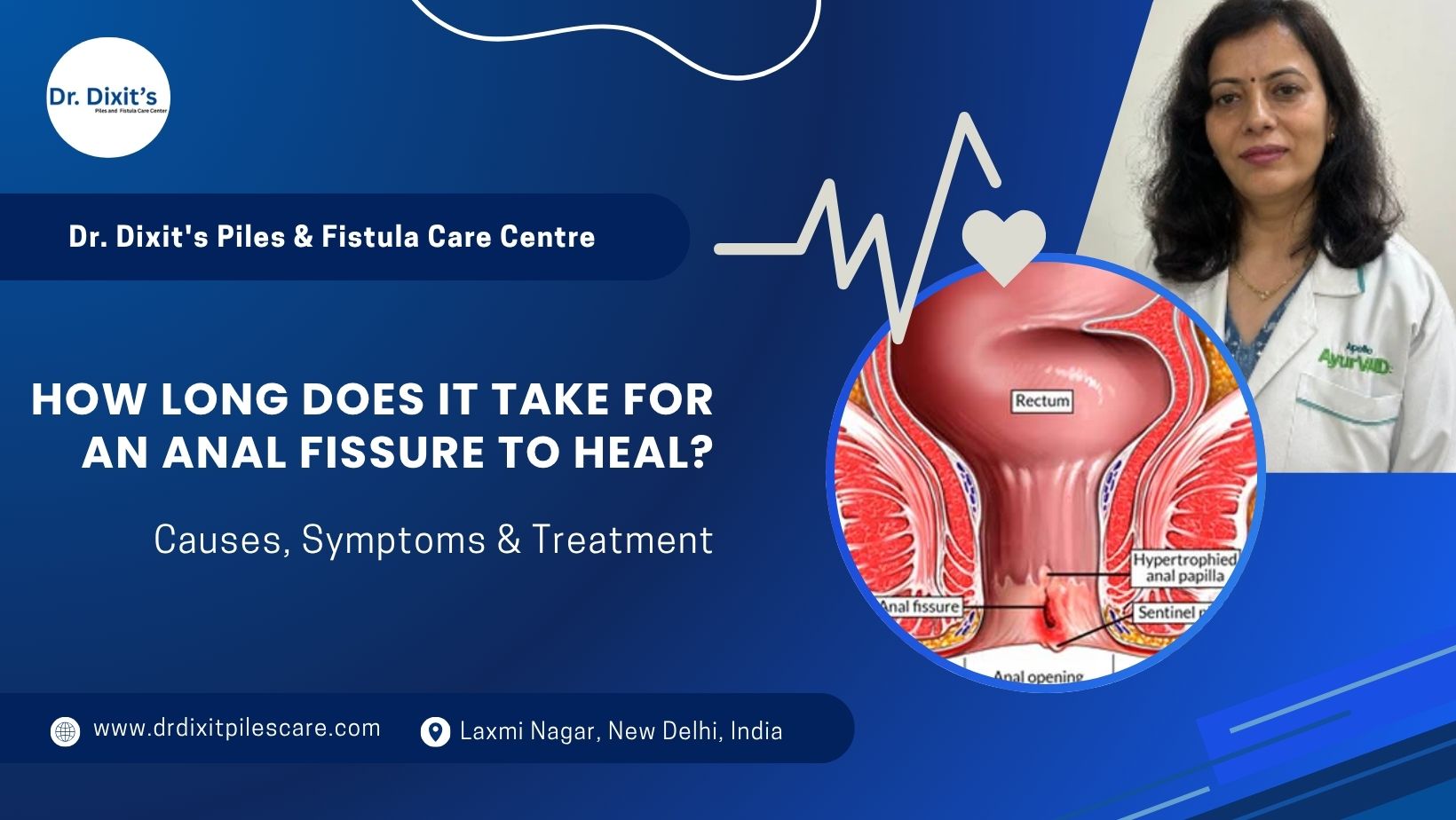
An anal fissure can be kind of a small tear in the lining of the anus, but it can really bring major pain and that annoying discomfort. A lot of patients who notice anal fissure symptoms ask the same thing: basically How long does an anal fissure take to heal? The honest answer depends on a few things like how deep or severe the fissure is, how fast treatment starts, and if it’s acute or more chronic. Knowing what’s happening during the healing process can help people handle their symptoms better, and it can also help them get the right anal fissure treatment at the right time.
What Is an Anal Fissure?
An anal fissure is a small tear in the skin around the anal canal. It often shows up because of constipation, passing hard stools, chronic diarrhoea, or too much pushing during bowel movements. You might notice symptoms like:
- Sharp pain during bowel movements
- Burning sensation after passing stool
- Small amounts of bleeding
- Itching or irritation around the anal area
- Fear of passing stool due to pain
Early diagnosis and treatment can help prevent the condition from becoming chronic.
Also Read: Best fissure treatment in Delhi
How Long Does an Anal Fissure Take to Heal?
Healing time depends on the kind of fissure, how severe it is, and how quickly treatment begins. Things like constipation, meal choices, proper hydration, and general bowel habits can really sway the recovery. Some people see real improvement within a few days, but full healing might take several weeks or even longer, depending on the state of the issue.
Acute Anal Fissure
A newly made fissure usually gets better in about 2 to 6 weeks if you take proper care, make dietary changes, and use the right medication. Because the tear is still recent, the body can repair the affected tissue more effectively once bowel movements become smoother, and the area stays less irritated. A lot of people notice less pain, plus less burning sensation, within the first few weeks after starting treatment.
Recovery tends to go quicker when patients stick to a high fiber diet, drink enough water, and don’t strain while using the bathroom. If someone ignores the early signs or keeps those routines that promote constipation, healing can get slower, and there’s a higher chance the fissure turns chronic longer than it should. Getting early anal fissure treatment is often the better path; it usually brings better outcomes and fewer complications later.
Chronic Anal Fissure
If the fissure keeps going for more than six weeks, it’s often classed as chronic. At that stage, the anal fissure treatment might need something more specialised, and the whole thing can take several weeks, or even a few months, to heal fully. In these situations the wound is opened again and again during bowel movements, which can make recovery kinda harder and also extend the symptoms.
People with chronic fissures usually end up with recurring pain, bleeding, and a persistent sense of discomfort even after trying home remedies. Long-lasting constipation, questionable dietary habits , and postponing care are some common reasons the fissure becomes chronic in the first place. Getting help from a fissure specialist in Delhi can support you in figuring out what’s really driving it and also offer a treatment approach aimed at long-term healing and stopping it from coming back again.
Stages of Anal Fissure Healing
Understanding the stages of anal fissure healing can help patients know what to expect during recovery.
Stage 1: Pain Reduction
Pain and burning sensations gradually begin to decrease after treatment starts and bowel movements become easier.
Stage 2: Improved Bowel Movements
With proper hydration and a high-fiber diet, stools become softer, reducing strain and allowing the fissure to heal.
Stage 3: Tissue Repair
The torn tissue begins to repair itself, leading to reduced bleeding and irritation.
Stage 4: Complete Healing
The fissure closes and symptoms disappear. Maintaining healthy bowel habits remains important to prevent recurrence.
How to Know If an Anal Fissure Is Healing
Many patients wonder how to know if an anal fissure is healing. Common signs include:
- Less pain during bowel movements
- Reduced bleeding
- Decreased burning and irritation
- Easier stool passage
- Improved comfort while sitting
If symptoms continue despite treatment, it may be a sign that the fissure requires further medical attention.
How to Heal an Anal Fissure Fast
Patients often search for how to heal an anal fissure fast. While there is no instant cure, certain measures can support recovery:
- Try to Eat a High-Fibre Diet: Eating a fibre-rich diet can help stools become softer and allow a smoother, almost easier bowel movement. Put fruits, vegetables, whole grains, and salads into your everyday meals, so constipation feels less likely and the extra strain is also reduced.
- Stay Hydrated: Drinking enough water throughout the day helps keep stools soft, and that makes them easier to pass. Good hydration also supports the digestive process and lowers the odds of constipation-related discomfort.
- Take Warm Sitz Baths: Spending 10–15 minutes in warm water may help calm and relax the anal muscles and can ease pain, irritation, and that general discomfort. This is one of the most commonly advised home care steps for fissure relief.
- Avoid Straining: Trying too hard during bowel movements can reopen the small tear and actually slow down healing. Don’t stay on the toilet too long and don’t force anything, even if it feels like you really need to go.
- Follow Medical Advice: Getting timely treatment and sticking with what your doctor says can really improve recovery. Acting early often keeps the fissure from turning into a chronic issue and it also reduces the chances that it comes back again.
Anal Fissure Without Surgery
In many cases, an anal fissure can be handled successfully without going to surgery, especially if you start treatment early. For the non surgical route, options might look like dietary tweaks, more water, simple lifestyle changes, medications, and also Ayurvedic therapies that help ease pain, encourage tissue to heal, and keep constipation away.
Many people tend to favor this conservative approach, because it kinda focuses on bettering bowel habits, and also on the real root cause behind the fissure. Getting timely anal fissure treatment matters too, since it can stop the problem from turning chronic, and that could mean less chance of needing surgery later.
When Is Surgery Needed?
If a fissure doesn’t really heal even after conservative treatment, sometimes surgery is suggested. The usual anal fissure surgery recovery time, really depends on the exact procedure plus how someone’s healing goes overall. Most people can slowly get back to normal routines within a few weeks post surgery. Still, a lot of patients first try non-surgical approaches before they think about surgical intervention.
Why Does an Anal Fissure Keep Coming Back?
Many patients notice their fissure seems better for a little while, then comes back after a few weeks or months. In most situations, a recurring fissure is really tied to deeper problems that keep adding pressure to the anal zone and somehow mess up proper recovery. Things that commonly lead to returning anal fissures include:
- Chronic constipation that leads to hard stools and straining
- A low-fibre diet that affects regular bowel movements
- Inadequate water intake results in dry and difficult-to-pass stools
- Delayed treatment allows the fissure to become chronic
- Ongoing digestive issues that repeatedly irritate the anal canal
If these factors are not handled, the fissure could reopen during bowel movements, even after it seems to heal at first. Keeping a balanced diet, staying well hydrated, and supporting good bowel routines really matters, and getting timely treatment for an anal fissure is a key part too, for long-term recovery and to reduce repeat episodes.
When Should You Consult a Doctor?
While mild anal fissures can sometimes ease up with home care and a few lifestyle changes, if the symptoms keep hanging around you shouldn’t just shrug it off. You should really talk to a doctor if you have intense pain while passing stool, frequent bleeding, or a sense of discomfort that throws off your normal daily routine.
If things don’t settle even after six weeks, or they keep coming back again and again, it might be pointing toward a chronic fissure and then specialised care becomes necessary. Getting timely guidance from the best doctor for anal fissure treatment in Delhi can help figure out the real underlying cause, stop further complications from building up, and support a quicker, more effective recovery.
Conclusion
How long an anal fissure takes to heal really depends on things like how severe it is, and how fast the treatment gets started. A lot of acute fissures can mend within a few weeks, but a chronic fissure, you know, may need more specialised attention and a longer sort of recovery. Starting treatment sooner, keeping good bowel habits, plus making the right dietary tweaks all matter a lot for healing, and also for stopping it from coming back again. If the pain or bleeding just keeps going, then seeing a fissure specialist in Delhi can be a helpful next step for getting effective care and longer-lasting relief.
FAQs
What is the fastest way to heal an anal fissure?
The best approach includes a high-fiber diet, adequate hydration, warm sitz baths, and timely medical treatment to support healing.
How do I know my fissure is healing?
Reduced pain, less bleeding, improved bowel movements, and decreased irritation are common signs that the fissure is healing.
Why does my anal fissure keep coming back?
Recurring fissures are often caused by constipation, poor diet, dehydration, or not addressing the underlying cause of the condition.
What foods should I avoid with an anal fissure?
It is generally advisable to avoid excessive spicy food, heavily processed foods, and low-fiber foods that may worsen constipation.
Is walking good for anal fissure healing?
Yes, light physical activity such as walking may help improve digestion and support healthy bowel movements.
Can sitting make an anal fissure worse?
Prolonged sitting may increase discomfort for some patients, especially during active symptoms. Taking regular breaks and maintaining proper posture may help reduce irritation.